
Fire Detection for Warehouses: What Your Building Actually Needs
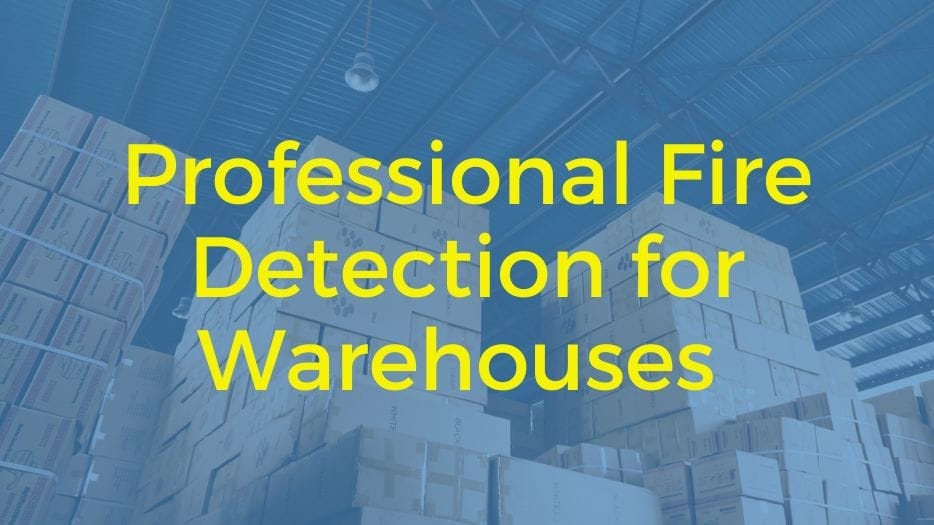
High ceilings, dense racking and materials ranging from cardboard to chemicals. Professional fire detection for warehouses creates challenges that off-the-shelf systems simply can't handle. Get the detection wrong and you're putting your people, your stock and your entire operation at risk.
We survey dozens of warehouse and industrial sites every year. The same problems keep coming up. Smoke that never reaches ceiling-mounted detectors. False alarms triggered by dust or forklift fumes. Systems installed without considering how the building actually operates day-to-day.
Here's what you need to know before investing in warehouse fire detection.
What UK Law Requires
The Regulatory Reform (Fire Safety) Order 2005 places clear duties on warehouse operators. You must appoint a Responsible Person to oversee fire safety. That person must ensure suitable and sufficient fire risk assessments are carried out, maintain records and make sure detection systems match the actual risks in your building.
This isn't optional — the Fire Safety Order carries criminal penalties for non-compliance. But getting it right isn't just about avoiding prosecution. It's about making sure your team goes home safe every shift. If you're new to fire alarm requirements, our guide to frequently asked questions about fire alarms covers the fundamentals before diving into warehouse-specific detail.
Why Standard Detectors Often Fail in Warehouses
A standard point detector (the round white disc on most office ceilings) works by sensing smoke particles that drift into a chamber. In a warehouse with 10-metre ceilings, that smoke may never arrive. It disperses, cools and spreads across a vast area before triggering anything useful.
That's why warehouse fire detection typically needs specialist approaches. The two most common options are beam detection and aspirating systems.
Beam Detection: Covering Large Spaces Cost-Effectively
Beam detectors send an infrared beam across the width of a building. When smoke particles interrupt the beam, the alarm triggers. A single pair of units can monitor a space that would need dozens of standard point detectors. That makes them a cost-effective choice for large, open warehouse areas.
We install beam detectors across warehouses, distribution centres and industrial units regularly. They're reliable when properly set up — but they need precise alignment during installation and regular checks afterwards. Dust, vibration from forklift traffic and building movement can all affect beam alignment over time.
Aspirating Systems: When Early Detection Is Critical
For warehouses storing high-value stock, pharmaceuticals or temperature-sensitive goods, aspirating smoke detection offers a step up. Sometimes called HSSD (High-Sensitivity Smoke Detection), these systems actively draw air samples through a pipe network and analyse them for the earliest traces of smoke.
An aspirating system can detect a developing fire long before visible smoke appears. That extra warning time can mean the difference between a contained incident and a catastrophic loss.
We recommend aspirating systems where the cost of stock loss or business interruption justifies the investment. If you're protecting high-value inventory, the detection system needs to match what's at stake.
How Warehouse Layout Affects Detection Design
Your detection system is only as good as its design. And warehouse layout creates specific challenges that a desk-based specification will miss.
High ceilings cause smoke to form in layers rather than rising uniformly to detector height. Dense racking creates blind spots where smoke builds undetected. Ventilation systems and loading bay doors disperse smoke, diluting it before detectors can respond.
We assess all of these factors during a site survey. Based in the West Midlands with nationwide coverage through the MAC Network, we survey warehouse sites from Stourbridge to Scotland. All our engineers are FIA Level 3 qualified (the industry benchmark covering fire alarm design, installation and maintenance). They walk the building, map airflow patterns, check racking configurations and design detection zones based on how your warehouse actually operates — not how it looks on a floor plan.
Maintenance: The Part Most Warehouses Neglect
Even the best detection system degrades without proper maintenance. BS 5839 (the British Standard for fire detection and alarm systems in non-domestic premises) sets out clear requirements for ongoing testing and servicing.
Weekly visual checks catch obvious problems like blocked detectors or damaged wiring. Monthly tests verify that control panels and sounders (the alarm speakers that produce the warning sound) respond correctly. Six-monthly professional servicing by qualified engineers is the BS 5839 baseline — but for warehouses, that's often not enough. Dusty environments, heavy forklift traffic affecting beam alignment, complex multi-zone systems or insurer requirements can all push that to quarterly. We'll tell you honestly which frequency your building actually needs based on your fire risk assessment, not just what the minimum standard says.
We handle all of this for our warehouse clients. Our engineers carry out scheduled visits, document everything for your insurers and flag issues before they become problems. When faults are found, we handle fire alarm repairs promptly — no waiting weeks for parts or return visits. You get a reminder when we're due, we turn up, we sort it. That's the kind of straightforward service 100+ Amber Taverns venues trust us to deliver across their sites nationwide.
Integration With Your Emergency Plan
Modern fire detection doesn't just sound an alarm. Systems can trigger automatic door releases, work alongside fire suppression equipment and generate reports showing who was on site during an evacuation. Integration with access control (electronic door entry systems that manage who goes where) means your fire strategy and security can work together.
We design systems where fire detection, access control and monitoring communicate with each other. When a fire alarm activates, doors can release automatically and access logs show who needs accounting for. That level of integration takes careful planning from the start — which is why we include it in every warehouse survey.
Is the Investment Worth It?
Warehouse fire detection is a significant spend. But weigh it against what you're protecting — your people, your stock, your ability to trade and your insurance position.
Early detection can prevent the kind of total loss that shuts warehouse operations down for good. Proper documentation of your fire safety measures demonstrates due diligence if the worst happens. And a well-maintained, compliant system can support your position with insurers at renewal.
We provide a free, no-obligation site survey to assess your warehouse and recommend the right detection approach. No pressure, no upselling — we recommend what's needed and explain why. If four beam detectors cover your space properly, we won't quote you for eight. We solve YOUR problem — not sell you extras you don't need.
People buy from people. And honest recommendations are what keep our clients with us year after year.
Contact MAC Security OR click the Get Your Quote button below for a free warehouse fire detection survey.


Fire safety and security legislation, standards, guidance and enforcement practice can change. MAC Security Systems makes no representations or guarantees, express or implied, that content on this site is accurate, complete or current. For practical advice about fire alarm systems, emergency lighting, security systems or system maintenance requirements for your premises, call MAC Security Systems on 0121 271 0149. For legal advice, fire risk assessment advice or confirmation of your statutory duties, speak to an appropriately qualified legal adviser, competent fire risk assessor or competent fire safety professional.